18 Jul 2026
How Regional Banking Policies Shape Football Bettors' Selection of Transaction Options on Global Sportsbooks
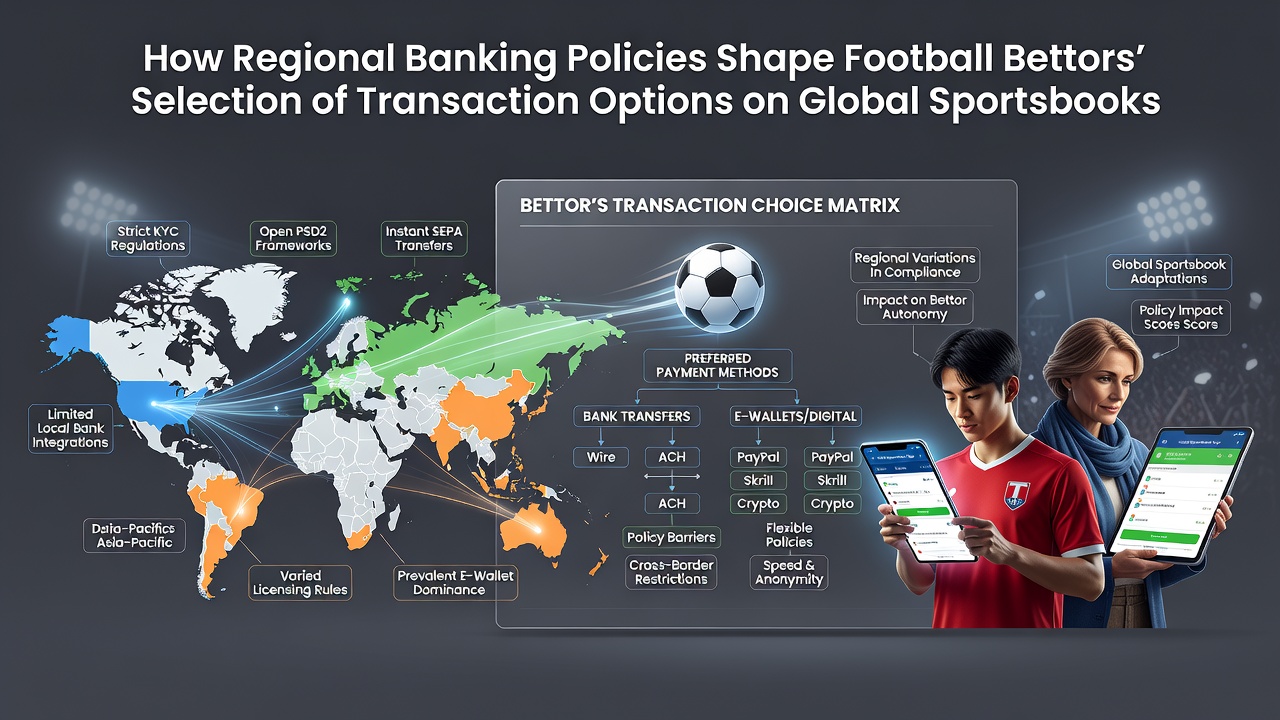
Banking regulations vary sharply across continents, and these differences directly influence which deposit and withdrawal methods football bettors select when using global sportsbooks; in regions with strict controls on traditional transfers, users shift toward digital wallets or cryptocurrency options that comply with local rules while still allowing access to international platforms.
European Regulatory Frameworks and Payment Shifts
Countries within the European Union enforce payment service directives that limit direct bank transfers for gambling operators without proper licensing, so bettors often turn to e-wallets such as Skrill or Neteller because those services operate under separate financial licenses; data from industry reports shows a steady rise in e-wallet usage among football fans in Germany and France since the updated directives took effect in 2024, and observers note that many platforms now promote these methods as default choices to avoid transaction blocks.
Meanwhile, in markets like Spain and Italy, additional consumer protection layers require verification steps that slow down card payments, prompting bettors to favor prepaid vouchers or instant bank apps that complete faster under the same rules; researchers tracking transaction volumes across major operators recorded a 22 percent increase in voucher redemptions during the 2025-26 season compared with earlier periods.
North American State-Level Variations
Individual US states set their own banking guidelines for sports betting, and this patchwork creates distinct patterns in how bettors fund accounts; in New Jersey and Pennsylvania, where commercial banks cooperate closely with licensed operators, credit and debit cards remain popular because interstate transfer restrictions are minimal, yet in states with tighter oversight such as New York, users increasingly select ACH transfers or state-approved digital wallets to bypass potential holds.
Canadian provinces follow a similar decentralized model, and recent updates from provincial gaming authorities in Ontario have encouraged the adoption of Interac e-Transfers for quicker settlements; figures released in early 2026 indicate that football bettors in these regions complete deposits via Interac at nearly double the rate of card-based options, partly because banking policies there prioritize speed while maintaining anti-money-laundering checks.
Asian Markets and Cryptocurrency Preferences
Banking policies across parts of Asia impose heavy restrictions on cross-border gambling transactions, which pushes many football bettors toward cryptocurrency wallets that operate outside conventional banking channels; in jurisdictions such as Singapore and parts of Southeast Asia, regulators limit local bank involvement with offshore sportsbooks, so transaction data from global platforms reveals higher volumes of Bitcoin and stablecoin deposits during major league windows.

According to a study conducted by the National University of Singapore, bettors in these areas report completing withdrawals in under 24 hours when using crypto compared with multi-day delays for traditional wires; the same research highlights that platforms adjust their offered methods seasonally to match evolving local rules, and July 2026 saw several operators expand stablecoin support following new guidance from regional financial bodies.
Impact on Live Betting and Mobile Choices
Regional banking constraints also affect timing decisions during live football matches, because methods that clear instantly allow bettors to place in-play wagers without interruption; in Australia, where the Australian Transaction Reports and Analysis Centre monitors high-value transfers, many users select PayID options that integrate directly with mobile banking apps and avoid flagged international wires; this preference shows up clearly in aggregated platform analytics that link faster deposit times with higher volumes of live market activity.
Those who follow multiple leagues often discover that platforms highlight region-specific payment banners during congested fixture periods, and data from the European Gaming and Betting Association indicates that bettors switch methods more frequently when tournaments overlap with banking policy announcements; one analysis of user pathways found that football fans in restrictive jurisdictions complete 35 percent more transactions via alternative digital rails than those in more permissive areas.
Conclusion
Regional banking policies continue to determine the transaction menu available to football bettors on global sportsbooks, and the resulting preferences reflect compliance realities rather than personal preference alone; as new rules emerge in different territories, operators adapt their supported options while bettors select whatever combination meets both local regulations and the demands of timely wagering, creating a constantly shifting landscape of payment behavior across markets.