6 Jun 2026
How Bettor Navigation Habits Through Sportsbook Interfaces Shift During Major Tournament Periods
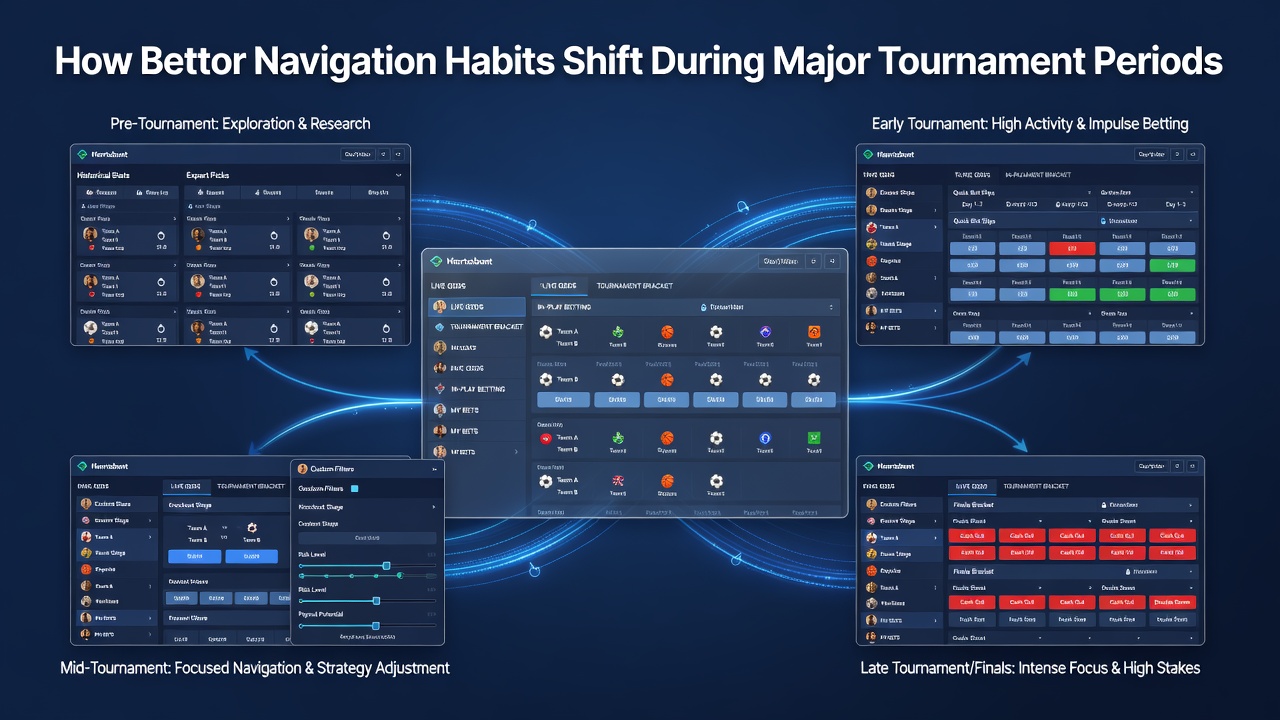
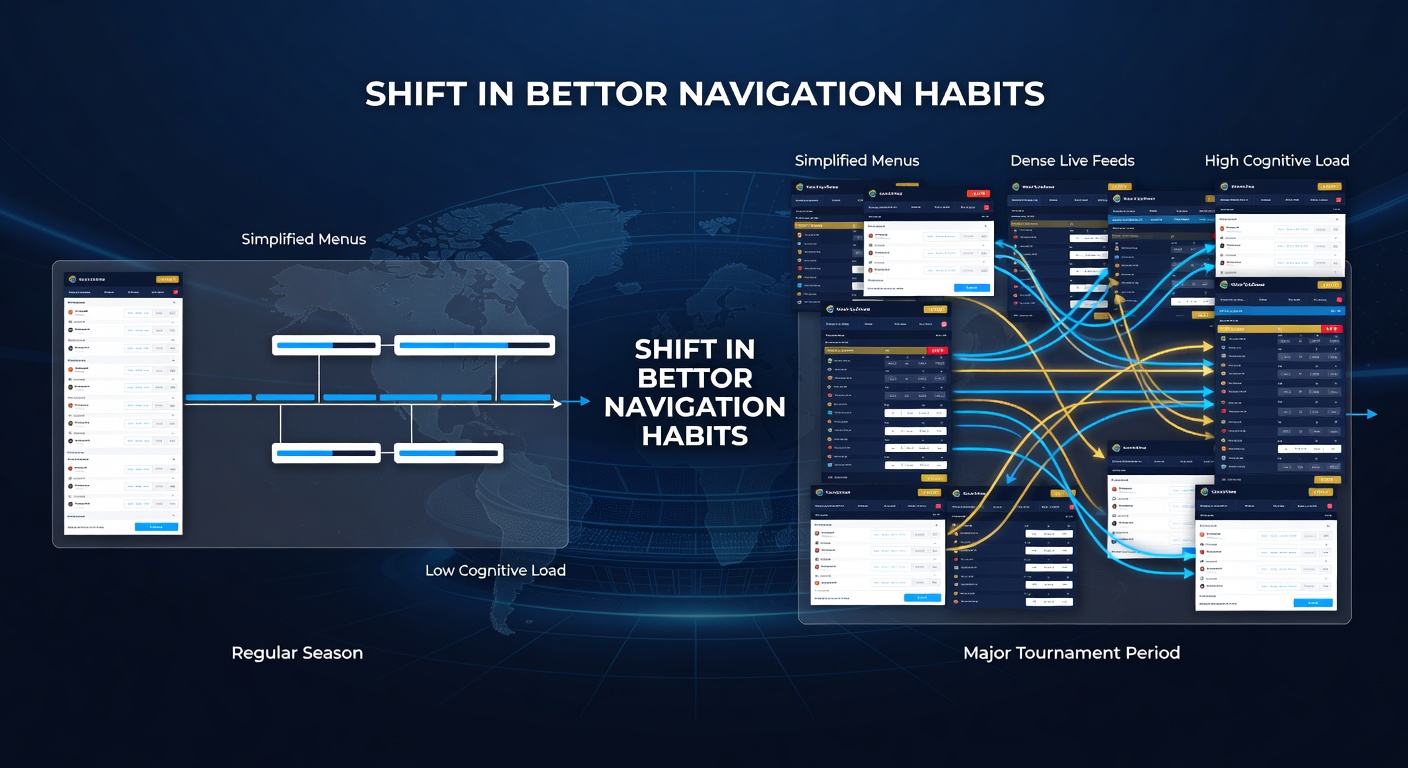
During major tournament periods, bettors demonstrate measurable changes in how they move through sportsbook interfaces, and platform analytics consistently record higher traffic directed toward live betting dashboards, real-time statistics panels, and in-play market sections. These shifts occur because tournaments compress multiple events into short windows, which forces users to prioritize quick access features over traditional pre-match browsing paths. Data from major operators shows that navigation sequences shorten during these windows while click rates on multi-view screens and push notification prompts rise sharply.
Interface Adjustments and User Flow Patterns
Sportsbooks respond to these periods by rearranging menu hierarchies and highlighting certain tools, yet bettors independently alter their own paths through the same interfaces even when layouts remain unchanged. Observers note that users spend less time on deposit or account management pages and instead route directly from home screens to event-specific hubs. Research indicates this behavior intensifies when several matches occur simultaneously, prompting reliance on search bars and favorited leagues rather than category browsing.
Platform logs reveal that mobile users in particular increase their use of swipe gestures and bottom navigation bars to toggle between scoreboards and betting slips. Desktop sessions during tournaments show elevated access to expanded stat overlays and comparison tools, whereas casual periods feature more static league list navigation. These patterns hold across different operators and appear tied to event density rather than any single platform design choice.
Traffic Volume and Feature Prioritization
Figures from regulatory filings and operator disclosures demonstrate that overall session lengths remain comparable to non-tournament periods, but the distribution of clicks within those sessions changes. Bettors allocate more actions to live odds refresh buttons and cash-out interfaces while reducing visits to promotional or loyalty sections. Studies of aggregated user data confirm that search functionality usage spikes when users seek obscure matches or niche markets that sit deeper in standard menus.
One analysis of North American platforms during the 2025 Copa América recorded a 34 percent increase in direct access to in-play sections compared with regular season averages. Similar patterns emerged ahead of the 2026 FIFA World Cup group stage draw, when June traffic logs showed elevated engagement with multi-match builders and accumulator tools. These shifts occur because the compressed schedule reduces the time available for exploratory navigation, leading users to favor saved shortcuts and predictive search suggestions.
Regional and Device-Based Variations
Navigation changes also vary by region and device type. European operators report stronger growth in desktop stat panel usage during continental tournaments, while North American data points to mobile-first behaviors during domestic league events. Australian regulatory summaries similarly note that tablet users increase their reliance on split-screen views during overlapping international fixtures. These differences reflect both hardware capabilities and local regulatory environments that influence interface customization options.
Operators adjust push notification strategies during these windows, and user response rates to event-specific alerts rise accordingly. Yet the underlying habit shift stems from bettors themselves deciding which interface elements merit repeated visits. Those who track historical odds movements tend to favor direct links to market history pages, while others concentrate activity around live score integrations that auto-populate betting options.
Data Sources and Measurement Approaches
Industry groups such as the American Gaming Association compile aggregated reports that track these behavioral adjustments across multiple states. Academic researchers at institutions examining digital gambling interfaces have published findings that align with operator telemetry, confirming that tournament periods compress navigation trees and elevate the importance of real-time elements. Canadian provincial regulators including iGaming Ontario have released comparable summaries showing parallel trends in user session composition.
These measurements rely on anonymized clickstream data and heat-mapping tools that capture where users linger or accelerate. The consistency across datasets suggests that interface navigation during high-stakes tournament windows follows predictable adaptations regardless of specific branding or regional rulesets.
Conclusion
Platform operators continue to refine menu structures and feature prominence based on these recurring patterns, while bettors independently develop efficient pathways through whatever layouts they encounter. The net result is a temporary but reliable reconfiguration of how users interact with the same underlying systems when major tournaments dominate the schedule. Continued monitoring of session analytics will likely document whether these habits persist or evolve as interface technologies advance.