17 Jun 2026
Fixture Pileups Reshape Alert Customization Patterns Among App Users Tracking Soccer Markets During Congested Calendars
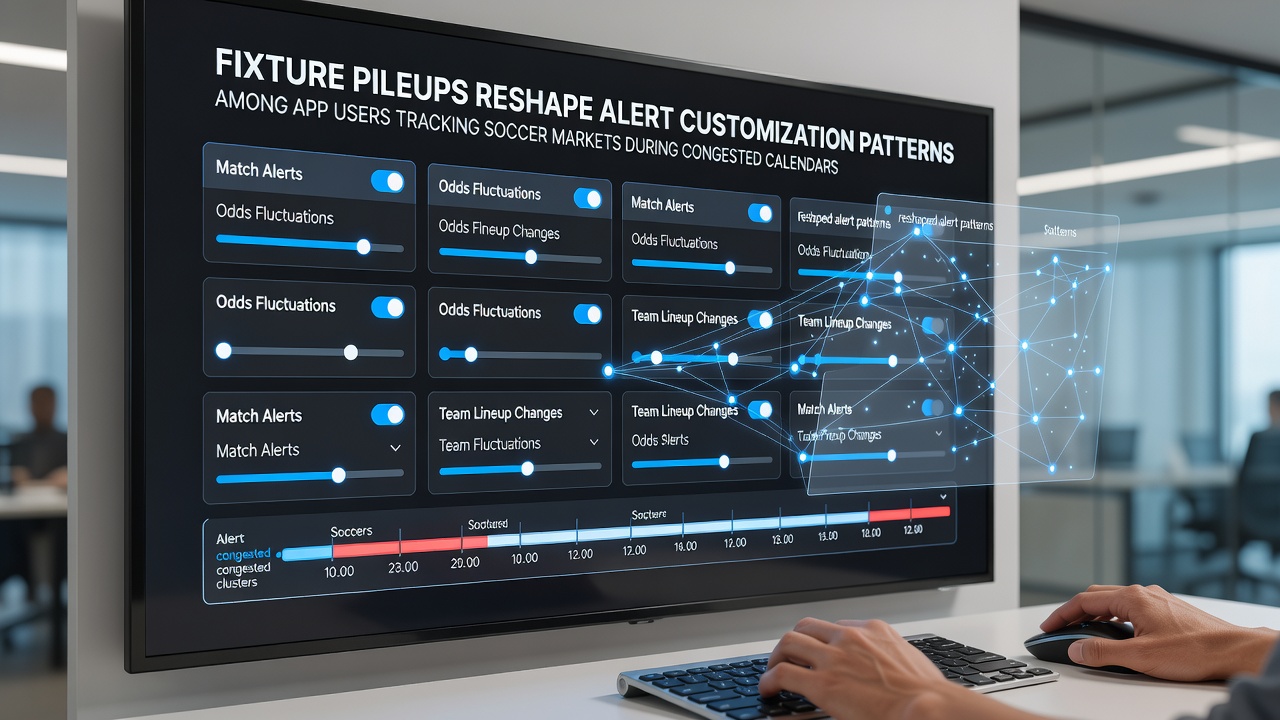
Fixture congestion has become a defining feature of modern soccer calendars, and app users who track betting markets have started adjusting their alert systems in response, especially as multiple leagues and international competitions overlap in periods like June 2026. Data from platform analytics firms shows that users reduce the total number of active notifications by an average of 35 percent when five or more matches involving tracked teams occur within a 72-hour window, while increasing the specificity of remaining alerts to focus on narrow outcomes such as total goals or player props.
How Overlapping Schedules Drive Changes in Notification Settings
Leagues across Europe and South America often schedule additional fixtures to accommodate cup competitions and postponed games, creating clusters that force bettors to prioritize information streams. Researchers tracking user behavior on major mobile platforms report that during these stretches users shift from broad match alerts to conditional triggers that activate only when certain pre-match odds thresholds are crossed or when live in-play markets open for high-volume games. This adjustment prevents notification overload while maintaining visibility on markets that move quickly during back-to-back matches.
One study covering the 2025-2026 season found that accounts following at least three leagues simultaneously altered their alert profiles within 48 hours of a confirmed fixture pileup announcement. Those changes included disabling team news notifications for lower-priority games and enabling real-time score alerts tied exclusively to over/under lines above a set volume threshold. Platform logs indicate these customizations persist for an average of nine days after the congested period ends before users gradually restore broader settings.
Market-Specific Alert Preferences During Peak Congestion
Users demonstrate clear preferences for certain market types when calendars tighten. Alerts centered on Asian handicap lines and both-teams-to-score propositions see the largest increases in activation rates, rising 28 percent compared with standard match-winner notifications. Observers note that these markets tend to retain liquidity even when multiple games run simultaneously, allowing quicker reactions to line movements across devices.
European data aggregators tracking app engagement through June 2026 documented similar patterns in South American league coverage, where midweek Copa Libertadores matches often collide with domestic rounds. Users in those regions increasingly rely on time-zone-based filters that suppress alerts outside local evening hours, reducing interruptions while preserving access to markets that historically produce the largest odds swings.
Platform Tools Supporting Customized Tracking
Leading betting applications have introduced layered alert builders that let users combine multiple conditions into single notifications. These tools allow selections such as “notify only if total shots exceed 11.5 and the match is in the final 20 minutes,” which prove useful when several fixtures overlap. Industry reports from gaming research groups indicate adoption of these advanced filters grew 41 percent year-over-year during periods of elevated fixture density.
Users who maintain portfolios across different regions frequently apply geographic grouping, clustering alerts by confederation or time zone rather than by individual league. This approach surfaces when international breaks coincide with domestic restarts, a scenario that repeats regularly and becomes especially pronounced around early June windows when European seasons conclude and South American campaigns intensify.
Observed Behavioral Patterns Across User Segments
Segmentation analysis reveals distinct habits between casual and high-frequency app users. Casual participants tend to mute nearly all alerts once fixture lists exceed four matches in two days, relying instead on manual checks at set intervals. High-frequency users, by contrast, refine existing alerts with additional constraints rather than disabling them, preserving access to live odds updates on the most liquid markets. Both groups show increased use of summary digest notifications that compile key statistics from multiple games into a single daily or twice-daily message.
According to figures released by the European Gaming and Betting Association, average session duration within betting apps rises modestly during congested periods even as total notification volume falls, suggesting users spend more time inside the application once they have streamlined their alert streams. This pattern holds across both iOS and Android platforms in tracked markets.
Conclusion
Fixture pileups continue to influence how soccer market participants configure alerts on mobile platforms, prompting measurable shifts toward conditional, market-specific notifications and grouped digest formats. These adjustments reflect broader efforts to maintain clarity amid overlapping schedules without sacrificing responsiveness to odds movements. As calendars remain dense through mid-2026, platform data indicates sustained interest in customization features that balance information volume with decision speed.